Part 01
The source
A relevant page that can pass internal authority to the target, with a natural place to put the link.
Most internal linking tools give you a diagram of the problem and leave the work with you.
Searchscope turns each opportunity into a job someone can do: the source page, the target page and the suggested anchor text, with underlinked pages flagged separately.
Placements suggested148to 37 target pages
Pages needing links37under 5 inlinks
Avg quality0.82content, traffic, need
24 of 61 source pages · one page edit each · matched by meaning, not by URL patterns
Internal linking analysis often arrives as a crawl visualization: a link graph that shows the structure without telling anyone what to change.
Each finding gives you the source page, the target page and the suggested anchor text, so the recommendation can be handed to someone who has never seen the site before.
Part 01
A relevant page that can pass internal authority to the target, with a natural place to put the link.
Part 02
The page that needs it, chosen because it's underlinked rather than because it's new.
Part 03
The wording to use, drawn from what the target actually ranks for.
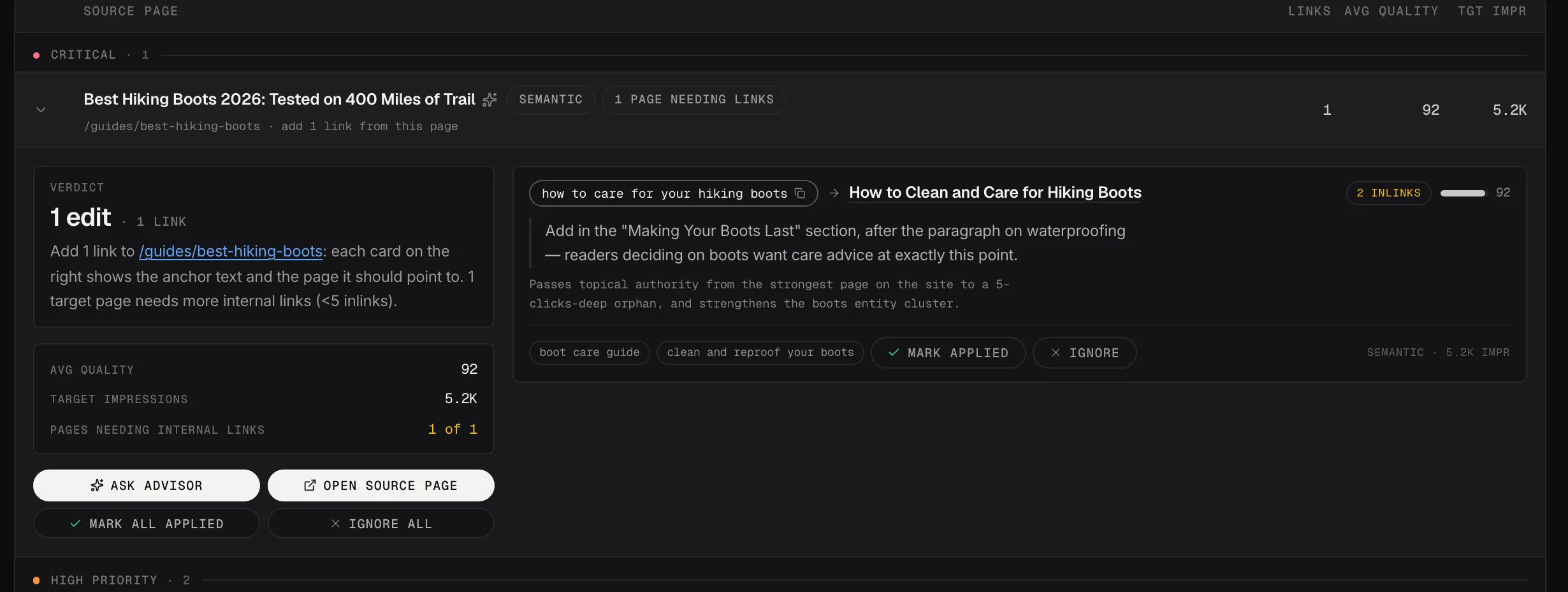
One placement: the source page, the anchor and where the link goes.
Demo dataInternal links should fit naturally within the existing content. Searchscope matches the target page against the language already used on potential source pages to find relevant placements.
Match 01
The target term appears on the source page as it stands.
Match 02
A close variant is present, and a light edit makes the link read naturally.
Match 03
The passage is about the target topic without using its words. Matched by meaning rather than exact wording.
A page can be well written and well researched but still receive very little internal authority, because too few pages link to it.
Pages below the inlink threshold are flagged separately, and grouped by potential source page. One source-page update can resolve several internal linking opportunities at once.
Ask the Strategic Advisor whether the opportunity should be prioritized against the other work in your queue. If the source page needs editing, send the finding to Content Studio with the source page, target page and suggested anchor already attached. Once the link is live, mark the finding as applied: the Impact Tracker records the baseline and shows what happens afterwards.
Connect your site and Searchscope runs the analyzers automatically, filtering and prioritizing the findings that deserve your attention.